Asbestos Floor Tile & Mastic Testing in Broward County
Asbestos floor tile testing checks 9x9 vinyl or asphalt floor tile and the black mastic adhesive beneath it for asbestos, since both were manufactured with asbestos into the early 1980s. Intact, undisturbed tile carries low risk; sanding, scraping, or removal releases fibers. Lab analysis using the EPA PLM method starts around $250.
Starting at $250
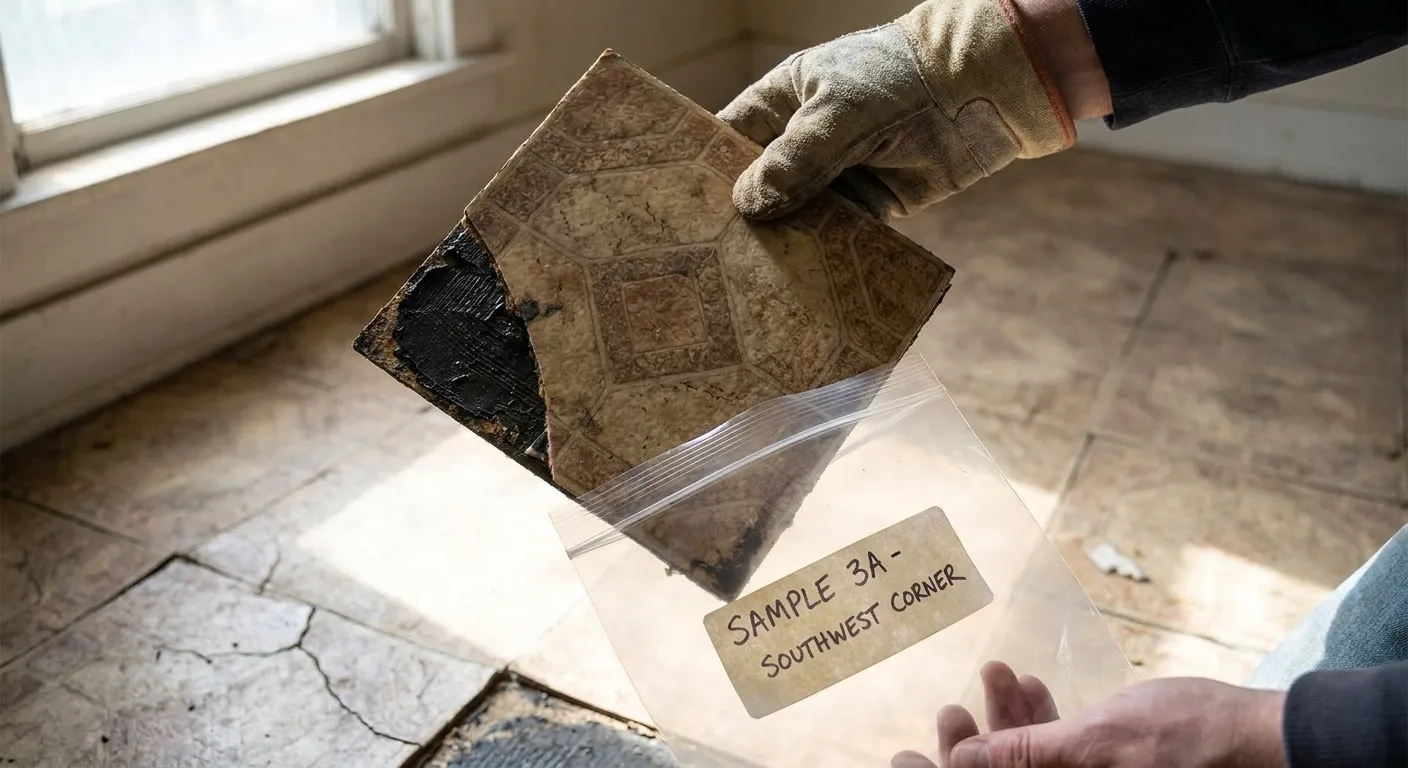
Pulling up old vinyl tile to lay new flooring, close on a sale, or finish a renovation often means hitting a layer of black adhesive that won’t scrape off clean. Homeowners and contractors across Broward County tend to focus on the tile and forget the glue underneath is a separate material — one can contain asbestos while the other doesn’t. Before anyone sands, dry-strips, or pries up that flooring, a lab result — not a guess based on the tile’s age or color — should settle the question.
Why Does 9x9 Vinyl Floor Tile Need Asbestos Testing?
9x9 vinyl and asphalt floor tile needs asbestos testing because manufacturers commonly added asbestos fibers to these products through the early 1980s for durability and fire resistance, according to the EPA. The tile’s size, color, or pattern offers no reliable clue, since asbestos fibers are microscopic and invisible to the eye. Only laboratory analysis under Polarized Light Microscopy — the EPA’s standard method for bulk building material samples — can confirm or rule out asbestos with certainty.
Broward County has a substantial supply of homes and small commercial buildings from that manufacturing era, which is why floor tile testing shows up regularly alongside popcorn ceiling testing on renovation and pre-listing checklists. Neither material announces itself, and neither should be handled based on a guess.
Is the Black Mastic Under My Floor Tile Also Tested?
Yes — a complete floor tile test samples the black mastic, or other adhesive, separately from the tile, because the two materials were manufactured differently and one can contain asbestos while the other does not. Mastic was a common carrier for asbestos fibers in flooring installations through the same era as 9x9 tile, and testing only the visible tile while ignoring the glue underneath leaves half the flooring assembly unverified. Our licensed inspectors put it directly: “We always submit the tile and the mastic as separate samples — testing one and assuming the other matches is how homeowners end up re-testing mid-demolition.” A single floor tile job in Broward County typically produces at least two lab samples for this reason, sometimes more depending on how many flooring layers are present.
Is It Safe to Leave Intact Floor Tile in Place?
Intact floor tile and mastic that are not being sanded, scraped, cut, or pried up generally carry low risk, because asbestos fibers only become airborne once the material is disturbed. Per OSHA, there is no established safe level of asbestos exposure, so low risk is not the same as no risk — it means the material is stable as long as it stays undisturbed and in good condition. Floor tile that is cracked, chipped, or already being pulled up for a renovation changes that picture, since breaking tile or dry-scraping mastic can release fibers directly into a work area. This is the same intact-versus-disturbed distinction that matters for popcorn ceilings and other older building materials, and it’s why testing — not the tile’s outward condition — should decide the next step.
How Do Inspectors Collect Floor Tile and Mastic Samples?
Inspectors collect floor tile and mastic samples by cutting a small section from an inconspicuous area, sealing the tile and the mastic in separate labeled bags, and sending both to an accredited lab for Polarized Light Microscopy analysis under the EPA’s bulk-sample method. On-site collection for a typical Broward County home takes about 30 to 60 minutes, and standard lab turnaround runs 2 to 3 business days, with rush results often available for time-sensitive closings or permit deadlines.
The collection sequence generally follows the same order on every job:
- Walk-through to identify tile type, visible condition, and mastic exposure
- Small sample cut from the tile and from the mastic, taken separately
- Each sample sealed, labeled, and logged with its collection location
- Submission to an NVLAP- or AIHA-accredited lab for PLM analysis
- Written report identifying asbestos content by sample, delivered within the standard turnaround
Cost follows sample count rather than square footage. A single-sample floor tile test in South Florida typically runs $250 to $700, and a job testing both tile and mastic across multiple rooms lands on the higher end of that range; the asbestos testing cost breakdown covers how sample count affects the total. Homes changing ownership often pair floor tile testing with pre-listing asbestos testing so results are in hand before a buyer’s inspection period starts.
What Flooring Eras Carry the Highest Asbestos Risk in Broward County?
Flooring installed before the early 1980s carries the highest asbestos risk in Broward County, since asbestos-containing tile and mastic were largely phased out of manufacturing around that time, according to the EPA. Flooring manufactured after that period is far less likely to contain original asbestos, though older tile and mastic can still be hidden underneath newer layers added during a later renovation.
| Flooring / Adhesive | Typical Era Installed | Risk if Undisturbed | Risk if Disturbed |
|---|---|---|---|
| 9x9 vinyl or asphalt floor tile | Before early 1980s | Low — stable if intact | High — sample before removal |
| Black mastic under tile | Before early 1980s | Low — stable if intact | High — test separately from tile |
| Flooring manufactured after early 1980s | Early 1980s forward | Low | Low, but confirm if layered over older material |
| Older flooring hidden under newer layers | Unknown until inspected | Unknown | Test before any layer is removed |
Floor tile removal tied to a larger renovation or demolition in Broward County can also trigger paperwork beyond the lab report. The county’s Asbestos Program requires a Statement of Responsibilities Regarding Asbestos, filed through the county’s ePermits system, before demolishing or renovating an existing structure, and projects that meet certain thresholds also need the Florida DEP’s Notice of Demolition or Asbestos Renovation under Chapter 62-257, filed 10 working days before work begins. A floor tile test result is usually the first document a permitting office asks to see.
Whether the project is a single room or a full-house flooring replacement, our Broward County team can schedule tile and mastic sampling and return lab results on a timeline that fits a renovation or closing date. Request a floor tile and mastic test before the first tile comes up.
Frequently asked questions
Should I worry about asbestos floor tiles?
Intact, sealed vinyl or asphalt floor tile that is left alone is generally low risk. The concern starts when old 9x9 tiles or their black mastic are cracked, sanded, or pulled up — that releases fibers. If your tile predates the mid-1980s and you plan to remove it, test it (and the mastic) first.
Related services
- Popcorn Ceiling Asbestos TestingPopcorn ceiling asbestos testing means collecting a sample from your textured ceiling an…
- Residential Asbestos Testing ServicesResidential asbestos testing means collecting samples from suspect materials — popcorn c…
- Asbestos Testing for Home Buyers, Sellers & Realtors in Broward CountyHome buyers, sellers, and realtors in Broward County typically order asbestos testing du…