Asbestos in Popcorn Ceilings: What Florida Homeowners Should Know
Popcorn ceilings sprayed before the early 1980s may contain asbestos, since EPA banned new spray application in 1973 but existing stock stayed in use for years after. Asbestos cannot be confirmed by sight — only a lab test using EPA's PLM method can, so testing before scraping or renovating is the safe first step.
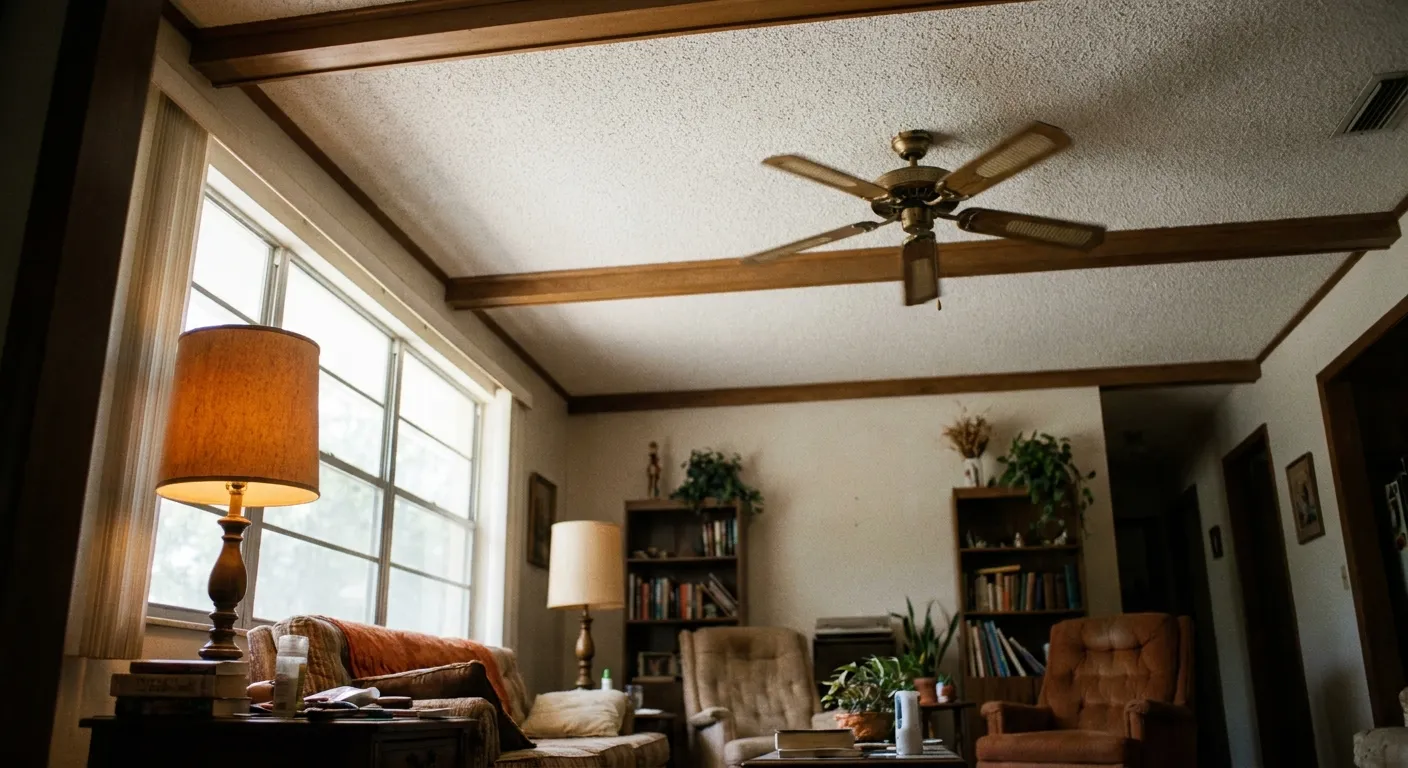
A textured ceiling in an older Broward County home doesn’t come with a label, and a contractor’s guess of “probably fine, it’s just old texture” isn’t a lab result. Before anyone scrapes, skim-coats, or drills into that popcorn finish for a kitchen remodel, a storm-damage repair, or a pre-listing refresh, it helps to know why these ceilings were sprayed with asbestos in the first place — and why looking at one never settles the question.
Why Do Older Popcorn Ceilings in Florida Contain Asbestos?
Spray-applied asbestos-containing ceiling texture was standard practice across the U.S., including Florida, until EPA banned new spray application of asbestos-containing surfacing material in 1973 — but that ban didn’t clear out distributor inventory overnight, and installers kept using existing stock and pre-mixed asbestos-containing compounds into the early 1980s, according to EPA. That window is why a popcorn ceiling’s age is a clue, not a verdict — a home built or re-ceilinged anywhere from the 1960s through the early 1980s could carry either an asbestos-containing texture or an early asbestos-free replacement. Broward cities with substantial pre-1980 housing stock — Hollywood, Fort Lauderdale, Pompano Beach, Dania Beach, Hallandale Beach, and Deerfield Beach among them — see this question come up often during renovations and home sales.
Can You Tell Just by Looking Whether a Ceiling Has Asbestos?
No — asbestos in a popcorn ceiling cannot be identified by sight, texture, sheen, or age alone, because visually identical spray textures were manufactured both with and without asbestos throughout the same years, and only laboratory analysis under an accredited method can tell them apart, not a homeowner’s or contractor’s best guess. A bulk sample is examined under Polarized Light Microscopy, the method described in EPA Method 600/R-93/116, at a lab carrying NVLAP or AIHA accreditation. Our licensed inspectors put it plainly: “We don’t estimate based on how a ceiling looks or when the house was built — a bulk sample and a lab report are the only things that tell us for certain.” That’s also why testing is a distinct, independent step from removal: our popcorn ceiling asbestos testing service collects and submits the sample, and we don’t sell the abatement work afterward.
Does the Age of a Popcorn Ceiling Predict the Risk?
A ceiling’s installation date narrows the odds but never replaces a lab result, because EPA’s 1973 rule only stopped new spray application — existing stock and pre-mixed compounds stayed in use, and older ceilings themselves remained in place, well into the early 1980s regardless of when the ban technically took effect. The table below summarizes what that timeline means for a given ceiling.
| Ceiling installed | Historical context | Asbestos likelihood |
|---|---|---|
| Before 1973 | Spray-applied asbestos-containing texture was common practice before EPA’s ban on new application | Likely — testing recommended before any disturbance |
| 1973 to early 1980s | New spray application was banned, but existing stock and pre-mixed compounds remained in use for years afterward | Possible — testing recommended |
| Mid-1980s or later | Asbestos-containing formulations were largely phased out of new construction by this point | Less likely, but composition varies by product and installer — testing is still the only way to confirm |
Nothing in that table substitutes for a sample — it’s a way to gauge how seriously to treat the question, not to answer it.
What Should You Do Before Scraping or Renovating a Popcorn Ceiling?
Test before you scrape, sand, drill, or skim-coat a popcorn ceiling, because disturbing a ceiling that turns out to contain asbestos releases fibers into the air, and OSHA has established that there is no safe level of asbestos exposure — risk climbs with the amount released and how long it’s breathed. If a ceiling is already damaged — from a leak, a fallen light fixture, or storm impact — the same rule applies before anyone cleans it up. A few practical steps hold in either situation:
- Don’t sand, scrape, drill, or dry-sweep a textured ceiling until it has been tested
- Keep the room closed off and avoid running fans or the HVAC system in a way that could spread dust
- Order a lab test before hiring anyone to remove the texture or skim-coat over it
- If the result comes back positive, treat the disturbance work as an abatement job, not a standard renovation task
On-site sample collection typically takes about 30 to 60 minutes for a residential ceiling, and standard lab turnaround runs 2 to 3 business days, with rush options often available if a renovation schedule is tight. Our residential asbestos testing covers this scenario directly, and our asbestos testing cost guide breaks down what a single-ceiling sample typically runs versus a multi-material job.
Does a Broward County Renovation Permit Require Testing the Ceiling First?
In most renovation and demolition projects, yes — Broward County’s Asbestos Program requires an online Statement of Responsibilities Regarding Asbestos, filed through the county’s ePermits system, before work that disturbs a ceiling or other suspect material can proceed, and the county’s Asbestos Program (EPGMD) issues a Certificate of Submittal once that filing is complete, according to broward.org. Larger projects can also trigger Florida DEP’s Notice of Demolition or Asbestos Renovation under rule 62-257.900, requiring 10 working days’ notice before work starts. Residential buildings with four or fewer dwelling units are generally exempt from most federal and county notification requirements beyond the online SRRA submittal, but the filing still applies, and a positive result changes the scope of the permit.
If a popcorn ceiling is part of what’s coming down or getting covered, it’s worth confirming what it actually is before the paperwork or the contractor’s schedule locks in. As an independent testing team working across Broward County, we’re not paid more for a positive result, so the answer you get is the one the lab found. Request a free quote and describe the room and the ceiling’s age — we’ll tell you what sample count and turnaround to expect for your address.
Related services
- Popcorn Ceiling Asbestos TestingPopcorn ceiling asbestos testing means collecting a sample from your textured ceiling an…
- Residential Asbestos Testing ServicesResidential asbestos testing means collecting samples from suspect materials — popcorn c…
- Floor Tile & Mastic Asbestos Testing for Broward County HomesAsbestos floor tile testing checks 9x9 vinyl or asphalt floor tile and the black mastic …