The Asbestos Testing Process, Step by Step
Asbestos testing in Broward County follows three stages: a licensed inspector collects bulk samples from suspect materials on site (30–60 minutes), an accredited lab analyzes them by Polarized Light Microscopy under EPA Method 600/R-93/116, and you receive a written report within 2–3 business days, with rush turnaround often available.
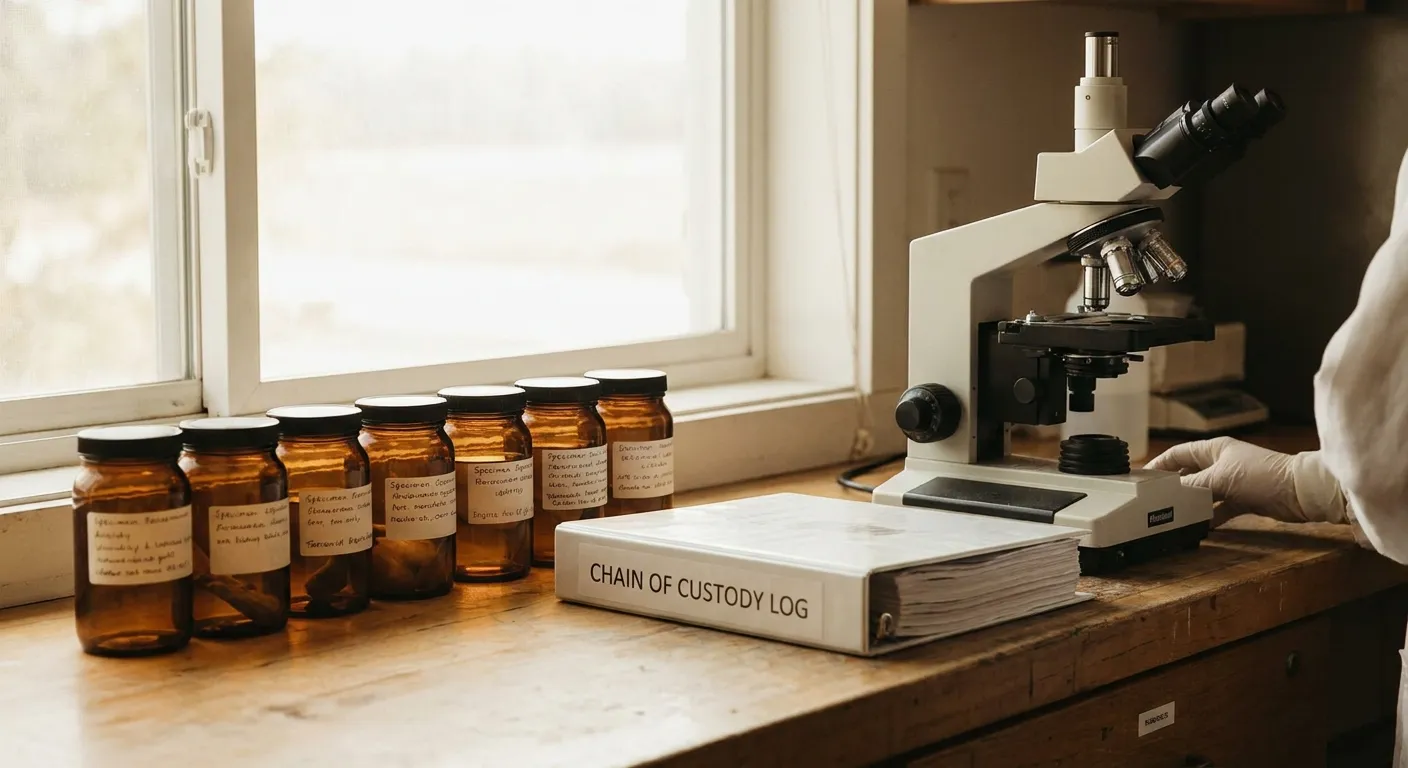
Once a suspect material turns up on a Broward County job — popcorn ceiling, old floor tile, a wrapped pipe — the next question is always the same: what happens now, and how long until there’s an answer? Different companies use “testing,” “sampling,” and “survey” almost interchangeably, which makes it hard to tell what’s actually being scheduled. Here’s what the process really looks like, from the first phone call to the lab report.
What are the steps in an asbestos test, start to finish?
An asbestos test in Broward County moves through five stages regardless of which company handles it: a call describing the project and material in question, an on-site visit where a technician collects bulk samples from each suspect material (typically 30 to 60 minutes), lab analysis under Polarized Light Microscopy per EPA Method 600/R-93/116, a written report identifying which materials contain asbestos and at what percentage, and — if results come back positive — a separate conversation about remediation with a licensed abatement contractor, since testing and removal are different jobs. Laid out on its own, the sequence is:
- Intake — describe the project, address, and the material of concern
- On-site sampling — a technician collects bulk samples, usually in 30 to 60 minutes
- Lab analysis — an accredited lab runs PLM under EPA Method 600/R-93/116
- Written report — pass or fail by material, with type and percentage when present
- Next steps — remediation planning with a licensed abatement contractor if a material tests positive
That structure holds whether the job is a single popcorn ceiling sample or a full survey covering an entire building.
How does an inspector decide what to sample?
A licensed inspector samples every material in the work area that could plausibly contain asbestos based on age and type, not just the one material a homeowner already suspects, because asbestos cannot be identified by sight, only by lab analysis, according to EPA guidance; in practice that means textured “popcorn” ceilings, 9x9 vinyl floor tile and its black mastic, joint compound, and pipe or duct insulation all get a second look in any Broward County home built before the early 1980s. Spray-applied asbestos surfacing was banned by EPA for new application back in 1973, but existing ceilings installed before the ban were never required to be removed — which is why an inspector checks the material itself rather than assuming a newer-looking home is automatically clear.
Our licensed inspectors describe the standard this way: “If a material was installed before the early 1980s and it’s about to be cut, drilled, or torn out, we sample it — guessing is exactly what testing exists to replace.” That habit of sampling broadly is also why a straightforward asbestos floor tile job sometimes turns up a second sample recommendation once the inspector sees what else is in the room.
What happens to a sample once it leaves the job site?
Once samples leave a Broward County job site, an accredited laboratory analyzes bulk materials — ceiling texture, floor tile, joint compound, insulation — using Polarized Light Microscopy under EPA Method 600/R-93/116, while airborne fiber concerns are analyzed separately through air sampling, with standard turnaround running 2 to 3 business days and 24-hour or same-day rush often available. EPA guidance calls for labs performing this work to carry NVLAP or AIHA accreditation, worth confirming before you pay for any test. The table below breaks out what to expect by sample type.
| Sample type | Lab method | Typical turnaround |
|---|---|---|
| Bulk material (ceiling texture, joint compound, pipe/duct insulation) | Polarized Light Microscopy (PLM), EPA Method 600/R-93/116 | 2–3 business days standard; 24-hour or same-day rush often available |
| Vinyl floor tile and black mastic | PLM, EPA Method 600/R-93/116, tile and mastic analyzed as separate samples | 2–3 business days standard |
| Airborne fiber samples | Air sampling, analyzed separately from bulk material | Varies by lab; rush options often available |
How long does the whole process take from first call to results?
Most single-family Broward County asbestos tests run from first call to written report in well under a week: on-site sampling takes 30 to 60 minutes, standard lab turnaround is 2 to 3 business days, and scheduling the visit is usually the longest variable in the timeline; projects tied to a demolition or renovation permit run on a stricter clock — the Florida DEP’s Notice of Demolition or Asbestos Renovation, rule 62-257.900, requires 10 working days’ notice before work can start. Broward County’s Asbestos Program also requires an online Statement of Responsibilities Regarding Asbestos, filed through the county’s ePermits system, before demolition or renovation of an existing structure, according to broward.org. If your project is on a permit deadline, how long does asbestos testing take breaks the timeline down further.
What’s actually in the final report, and what do you do with it?
The final report lists each material sampled, whether it tested positive or negative, and, when positive, the type and percentage identified — a document a contractor, permit office, or buyer’s agent can act on directly; under the federal NESHAP rule, 40 CFR Part 61 Subpart M, a thorough asbestos inspection is required before demolition or renovation of regulated facilities, and this report is the record that satisfies it. OSHA has been clear that there is no established safe level of asbestos exposure, which is why a positive result on even one material is worth acting on — not by removing anything yourself, but by bringing the report to a licensed abatement contractor.
Once you have a report in hand, the decisions that follow (schedule abatement, disclose to a buyer, close out a permit condition) are yours to make. Broward Asbestos Testing handles the sampling and lab side of that timeline for homes and buildings across the county — get my free quote and we’ll confirm sample count, turnaround, and next steps before anyone shows up.